Decoding Historical Significance of Renowned Artists’ Paintings
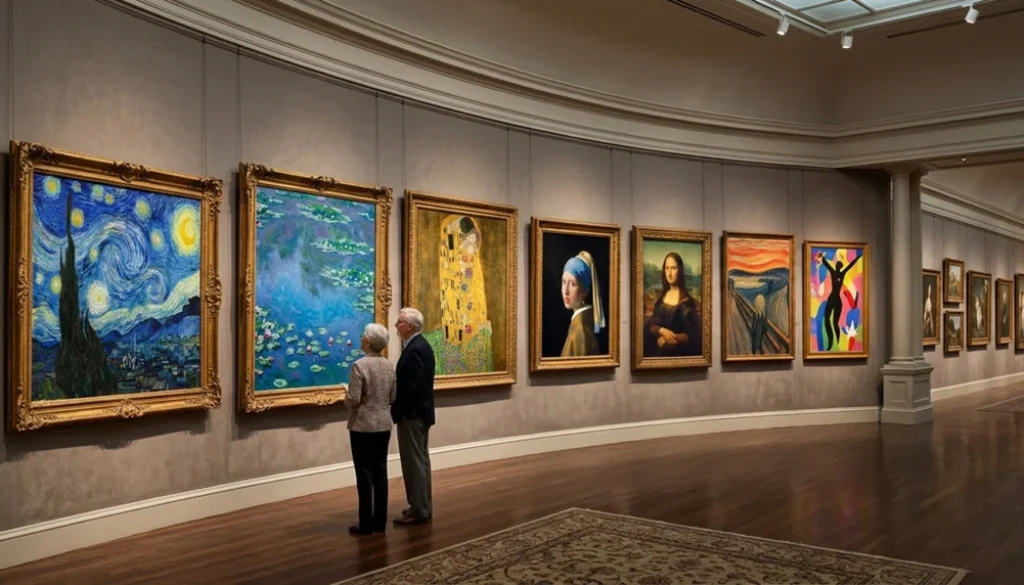
You’ve admired the art, now delve deeper. Unearth the hidden historical context behind the world’s most renowned paintings.
You’ll decode da Vinci’s Mona Lisa, explore Van Gogh’s mental state through Starry Night, understand Picasso’s protest in Guernica, and feel Frida Kahlo’s pain and power in her self-portraits.
You’re not just viewing art; you’re peeling back the layers of history it holds.
So, let’s turn your admiration into understanding.
Understanding Art as Historical Documentation
By studying paintings, you’re immersing yourself in the artist’s historical context, gaining insight into the events, cultures, and ideas that shaped their world. This immersion facilitates a process of historical interpretation through artistic documentation, which reveals more than just the artist’s skill.
You’re analyzing their choice of subjects, colors, and styles, which reflect the societal norms and values of their era. You’re not merely looking at a painting, but a tangible piece of history, a snapshot of a bygone era.
In this way, artistic documentation becomes a powerful tool for historical interpretation, offering a unique perspective into the past, beyond the scope of written records. By appreciating art in this light, you deepen your understanding of history and humanity’s shared story.
Da Vinci’s Mona Lisa: More Than a Smile
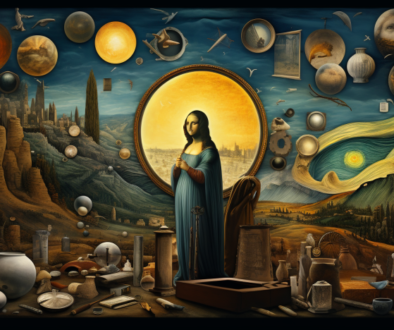
When you gaze into the enigmatic smile of Da Vinci’s Mona Lisa, you’re delving into a world beyond the canvas, steeped in the social and cultural nuances of the Italian Renaissance.
You start to uncover:
- Hidden Symbolism: The veil, the winding paths, and the desolate landscape in the background all hold potential symbols.
- Lisa’s Identity: Her identity isn’t just her name; it’s her status, her character, her world.
- The Mysterious Smile: It’s not just a smile; it’s a testament to Da Vinci’s understanding of human psychology.
- The Use of Light and Shadow: It’s not just artistry; it’s a deliberate tool to add depth and realism.
- The sfumato Technique: It’s not just a painting technique; it’s a reflection of Da Vinci’s innovative spirit.
Van Gogh’s Starry Night: a Glimpse Into Madness
Delving into the swirling, vibrant hues of Van Gogh’s Starry Night, you’re stepping into the tumultuous world of an artist grappling with his own madness. The painting, a nocturnal tableau of energy and chaos, is a poignant lunacy representation, a window into Van Gogh’s troubled psyche.
The symbolic brushstrokes, bold and dynamic, mirror his emotional turbulence, reflecting his struggle to withstand the onslaught of his mental illness. The fiery orbs in the sky aren’t just stars; they’re sparks of madness, illuminating the dark abyss of his mind.
The cypress tree, reaching towards the sky, symbolizes his yearning for peace and sanity amidst the storm. So, in Starry Night, you’re not just seeing a night sky. You’re witnessing an artist’s desperate fight against his inner demons, painted in brilliant shades of despair and hope.
Picasso’s Guernica: A Cry Against War
In Picasso’s Guernica, you’re confronted with a stark, monochromatic canvas that’s a powerful indictment against the horrors of war. It’s a tangible echo of Picasso’s pacifism, a cry against violence and destruction. Guernica’s symbolism isn’t just about the atrocities of war, but it’s a broader commentary on human suffering.
Here’s a brief breakdown:
- The bull and the horse: symbols of Spain’s traditional culture, now tormented and anguished.
- The light bulb: representing the ‘bomb’ of technology’s destructive power.
- The mother with a dead child: a nod to the timeless symbol of grief, reminiscent of Michelangelo’s ‘Pieta’.
- The broken sword: a symbol of defeated justice.
- The fallen warrior: embodying the needless sacrifice of lives.
Through Guernica, you witness Picasso’s profound horror about war’s inhumanity.
Frida Kahlo’s Self-Portraits: Pain and Empowerment
Just as Picasso’s Guernica echoes the artist’s horror at war, so do Frida Kahlo’s numerous self-portraits reveal a different kind of battle, one where pain and empowerment meet.
Kahlo’s feminism is a key theme in her art, and her self-portraits are no exception, often depicting herself in masculine attire or in roles traditionally ascribed to men. They’re a fierce assertion of her individuality and strength, a bold rejection of societal norms.
Her symbolism exploration is equally profound, using vibrant colors, traditional Mexican motifs, and surreal elements to express her physical suffering and emotional turmoil.
Yet within this pain, Kahlo found empowerment, using her art to control her narrative and assert her identity. Her self-portraits are more than just images; they’re an intimate diary of her life, a testament to her resilience.
Frequently Asked Questions
How Did the Socio-Political Climate Influence the Works of These Renowned Artists?
You’re examining how the socio-political climate sparked artistic rebellion in renowned artists. It’s fascinating to see cultural reflections in their works, showing how they interpreted and responded to their era’s challenges and changes.
Are There Common Themes or Techniques That These Artists Used in Their Paintings?
Definitely, you’ll notice many artists employ symbolic representation and visual metaphors. They’re not just artistic techniques; they’re tools for communicating deeper meanings or commenting on their society and time period.
What Are Some Less Known Works of These Artists That Also Carry Significant Historical Meaning?
You’re delving into hidden symbolism exploration and unrecognized artistic contributions. Lesser-known works often bear historical significance, like van Gogh’s “The Potato Eaters” or Monet’s “Bathing at La Grenouillère”. They’re gems waiting to be discovered.
How Have These Famous Paintings Influenced Modern Art and Artists?
You’re observing how these iconic paintings have shaped artistic evolution, inspiring contemporary interpretations. They’ve offered modern artists fresh perspectives, experimentation avenues, and narratives, profoundly impacting the aesthetic and thematic diversity in today’s art landscape.
Can the Monetary Value of These Paintings Be Directly Linked to Their Historical Significance?
You can’t directly link a painting’s monetary value to its historical significance. Artistic inspirations and market trends play a huge role in determining a piece’s worth. It’s more complex than a simple correlation.
Closing Thoughts
In deciphering art, you’re not just appreciating aesthetics, but also unearthing historical narratives.
Mona Lisa’s enigmatic allure, Starry Night’s chaotic beauty, Guernica’s haunting devastation, and Frida’s raw self-portraits, all provide you with a unique lens to view their respective eras.
Each masterpiece serves as a testament to the artist’s experiences, feelings, and times, capturing the essence of history in vivid, unforgettable strokes.
So remember, when you examine art, you’re also decoding the past.